Setenta
The valley in full fruit. Cane sugar and nothing else — the criollo carries the rest.
cherry · raw honey · long melt
Bean to bar · Ocumare de la Costa, Venezuela
We buy one hillside of criollo cacao — Hacienda La Candelaria, in the Ocumare valley — and turn it into bars four times a year, once for every picking. Subscribe, and taste the year move.
The criollo lexicon
Criollo is the quietest of the cacaos — low in bitterness, long on fruit. Every batch we make is logged against an eight-note wheel our tasters actually use, not a poster of a hundred flavors nobody finds. Three fruit notes lead this year’s pickings. Choose one and the whole page takes its color.
Criollo doesn’t shout. It names its fruit quietly and waits for you to notice.
Husk gold — the house register. Select cherry, apricot or fig to hear one note above the others.
i. Harvest
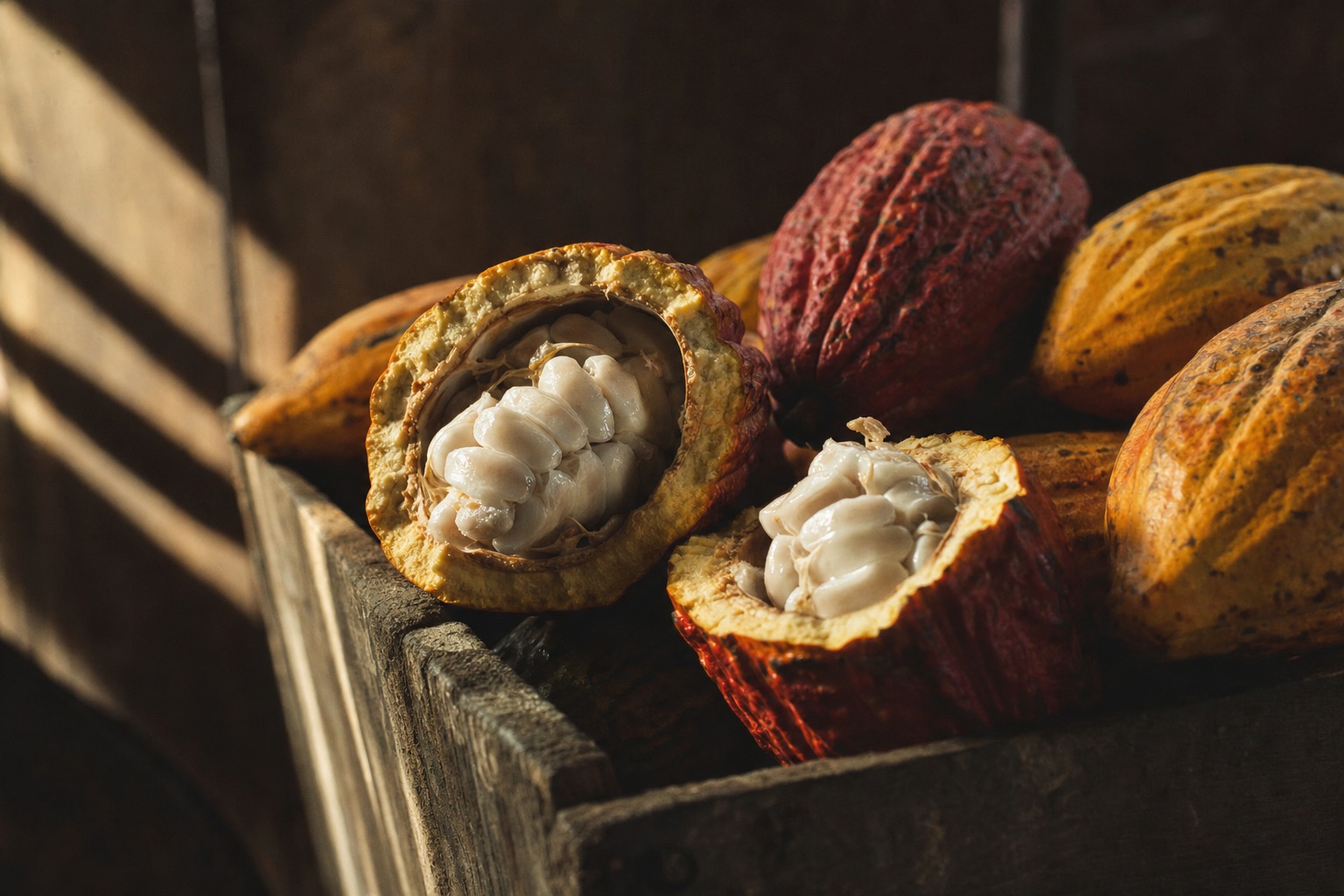
Ripe criollo announces itself: tap the pod and it answers with a dry knock. Our pickers walk the same forty rows every week of a picking window, machetes sharpened to take the pod without bruising the cushion it grows from — next year’s flowers live there. Pods are split within four hours, while the pulp is still cold from the night.
ii. Ferment
Fermentation is where chocolate flavor is born — and where it is most easily killed. Criollo’s thin-walled beans give up their fruit early; the long ferments that bulk cacao needs would trade our cherry for vinegar. So we run a short, hot cascade: three cedar boxes, turned daily, stopped the moment the bean’s core turns the color of toasted bread.
iii. Roast
Dark roasts make every origin taste the same — that is their job. Ours is the opposite: 118 °C for twenty-two minutes, drum slowed to a walk, pulled the moment the shell lifts. Low enough to keep the esters fermentation built, hot enough to close the door on green astringency.
iv. Conch
The conche is a granite basin that folds warm chocolate over itself, hour after hour, driving off the last acetic sharpness and rounding every particle until the melt turns to silk. There is no shortcut. Batch 41 is in the basin now — the clock below is its clock, ticking in real time.
61:14:09 of 72:00:00
granite conche · batch nº 41 · candelaria picking
v. Temper
Cocoa butter freezes into six different crystal forms, and five of them make bad chocolate — dull, crumbly, quick to bloom. Tempering is a walk along a temperature curve that melts everything, seeds Form V, then burns off the pretenders. Drag the thermometer along the curve and watch what lives and dies.
Drag the point, or use ← → arrow keys
vi. Bar
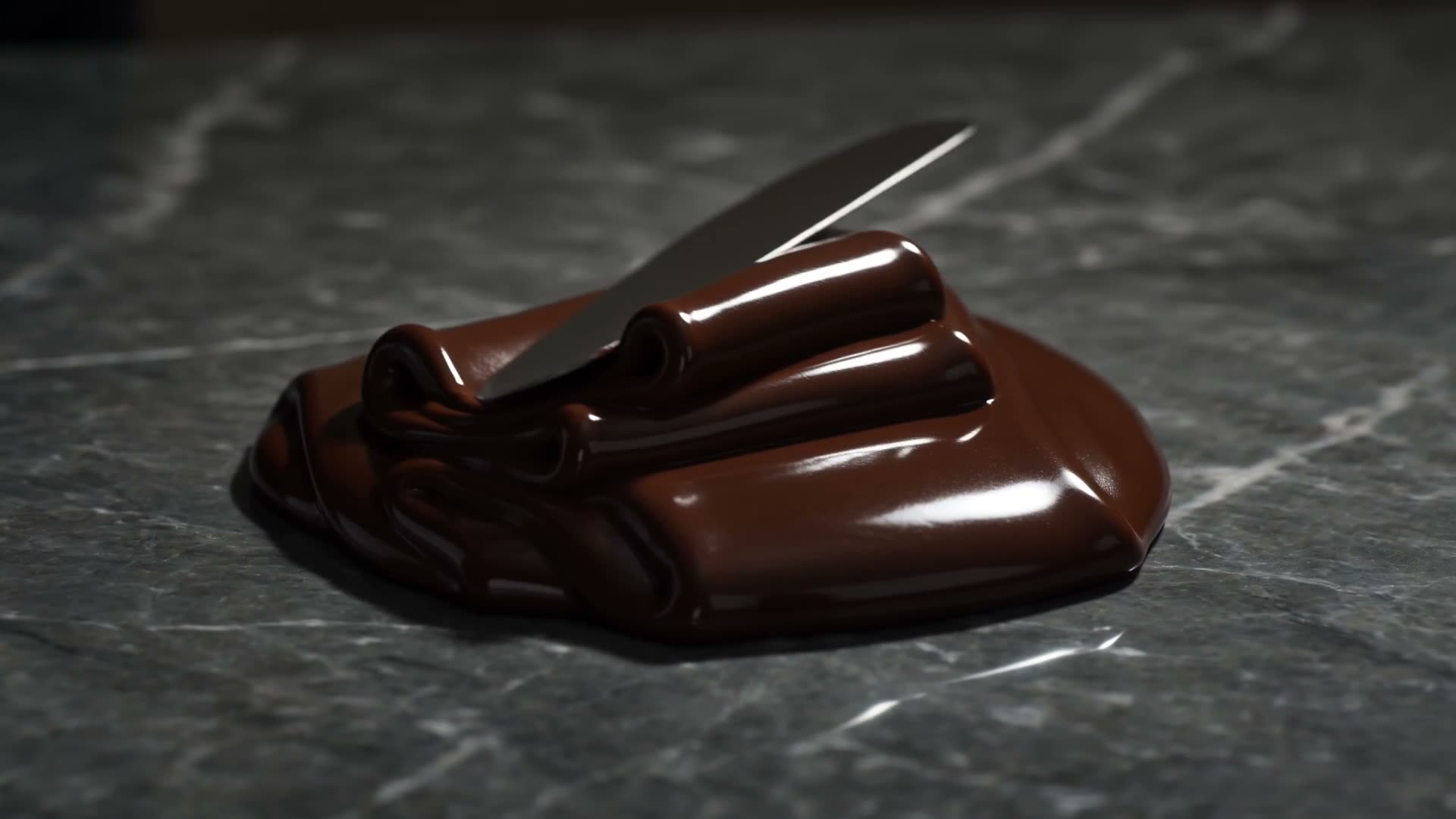
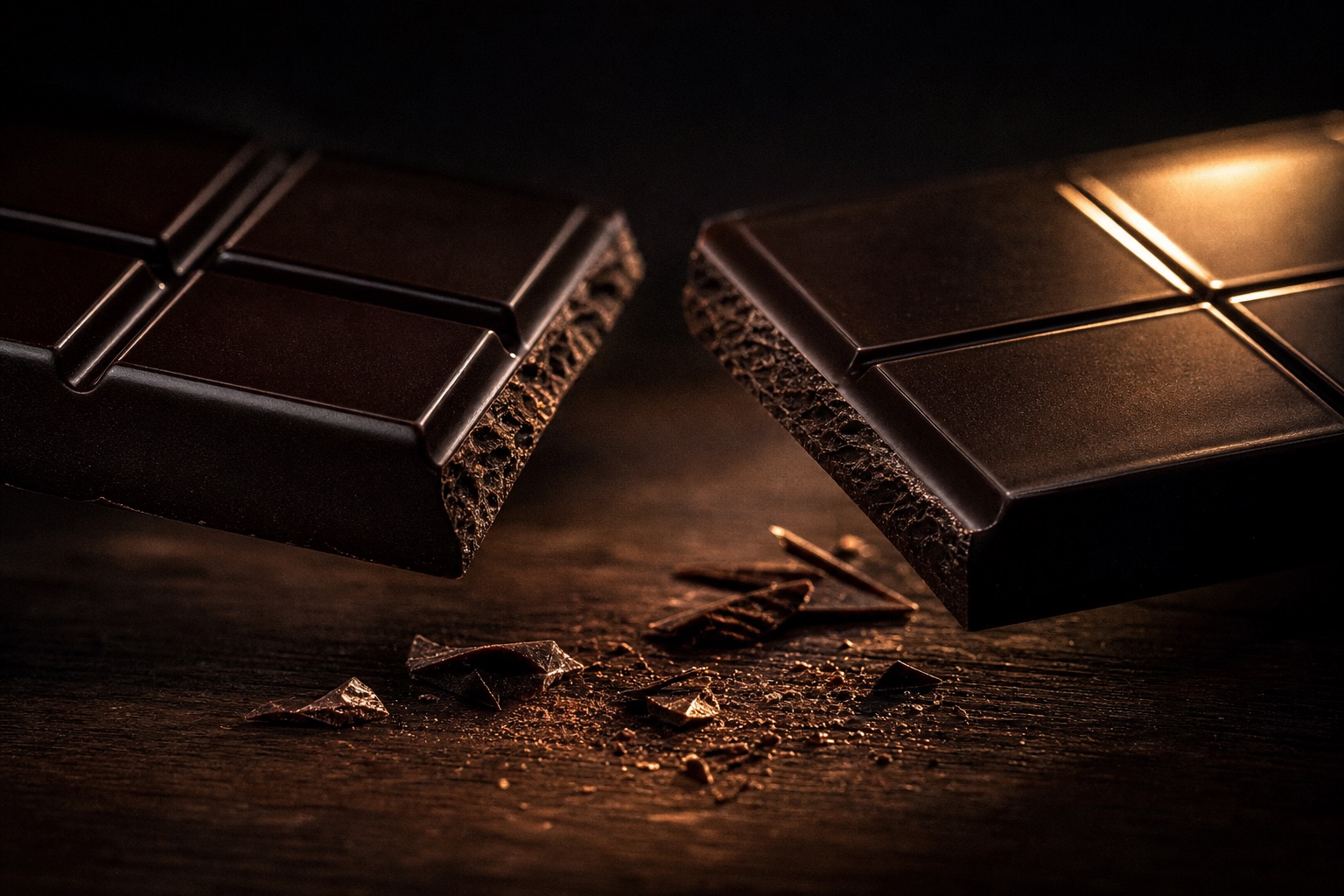
Tempered chocolate goes into the moulds in one continuous pour — you saw it at the top of this page. Twenty minutes of cool air, one sharp knock, and the bars fall out wearing the gloss that only Form V gives. Three strengths per picking, same beans, three depths of the same valley.
The valley in full fruit. Cane sugar and nothing else — the criollo carries the rest.
cherry · raw honey · long melt
Sugar steps back, the roast steps forward. The bar our tasters keep for themselves.
apricot · toasted almond · cocoa tannin
Nothing added at all. Proof that a great ferment needs no sugar to read as sweet.
fig jam · molasses · tobacco leaf
The subscription
The Ocumare valley flowers in waves, so La Candelaria picks four times a year — each window named, as everything is here, for the feast nearest its first cut. Subscribers receive each picking as three bars (70 / 85 / 100) about ten weeks after harvest, with the batch log and cut-test photos in the box.
February · shipment i
The bright picking. Cool nights hold the acidity; the ferment runs a half-day shorter.
Leads with red cherry, raw honey.
May · shipment ii
First rains, fat pods, the year’s gentlest bean. The 70% from this window sells out first.
Leads with dried apricot, orange blossom.
August · shipment iii
High summer. Slower trees, denser pulp, a darker ferment we let run the full four days.
Leads with fig jam, toasted almond.
November · shipment iv
The main crop and the year’s deepest flavor. The 100% here is our reference bar.
Leads with molasses, tobacco leaf.
$132 for the year — four shipments, twelve bars, batch logs included. We make 900 subscriptions and no more; the hillside decides.